
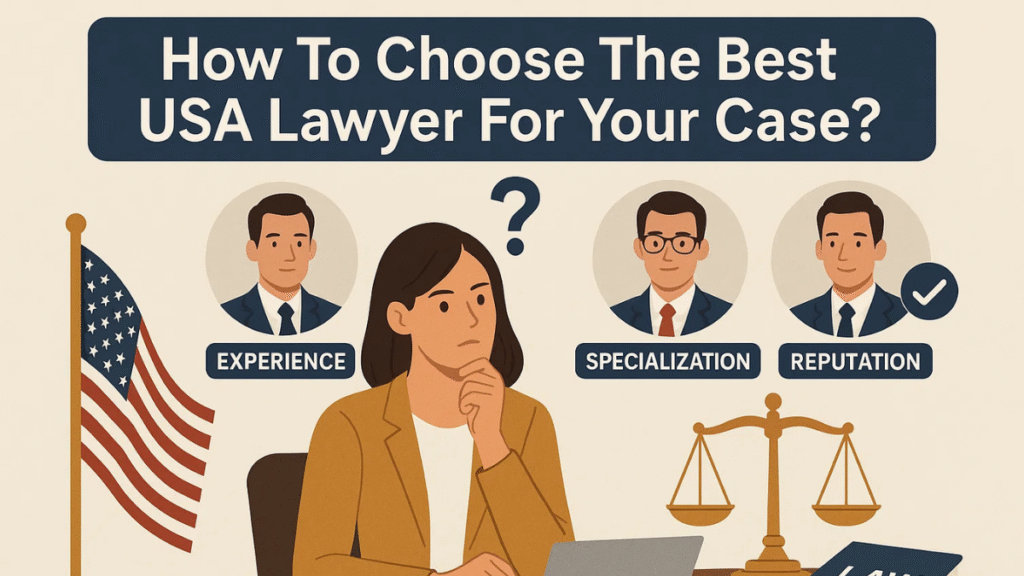

Choosing the best USA lawyer for your case can be one of the most important decisions you ever make. Whether you’re dealing with a criminal charge, a family dispute, an immigration issue, a business conflict, or a personal injury claim, the right lawyer can drastically change the outcome. With thousands of legal professionals available across the United States, it’s essential to understand what makes a lawyer truly effective and how to evaluate your options. This comprehensive guide discusses everything you need to know — from identifying the right specialization to checking credentials, asking the right questions, and understanding fee structures. By the end of this article, you’ll have a clear roadmap to selecting the best USA lawyer for your situation.
Understanding Why Choosing the Right Lawyer Matters
The legal landscape in the USA is complex. Laws vary from state to state, courts operate under different rules, and legal strategies depend heavily on experience. Choosing the wrong lawyer can lead to poor representation, lost money, delays, and even irreversible legal consequences. A skilled lawyer, on the other hand, can protect your rights, guide you with clarity, and maximize your chances of success.
Legal Outcomes Depend on Expertise
Even minor differences in legal knowledge can significantly affect case results. Lawyers with experience in a specific area are more likely to anticipate challenges, understand local courts, and apply strategies that work.
A Good Lawyer Saves You Time and Money
Some people choose lawyers without proper evaluation, only to spend more later when issues arise. A reliable lawyer streamlines the legal process, avoids unnecessary complications, and prevents costly mistakes.
Identify the Legal Area You Need Help With
Not all lawyers handle all types of cases. Choosing a lawyer who specializes in your specific legal issue is the first and most crucial step.
Different Types of USA Lawyers
Here are some common lawyer categories you may need:
- Criminal Defense Lawyers: Handle charges such as DUI, theft, or assault.
- Family Lawyers: Manage divorce, custody, adoption, and support issues.
- Personal Injury Lawyers: Assist with accident claims, medical malpractice, or workplace injuries.
- Business Lawyers: Deal with contracts, disputes, compliance, and corporate issues.
- Immigration Lawyers: Help with visas, green cards, citizenship, and deportation cases.
- Employment Lawyers: Address workplace disputes, discrimination, wrongful termination, and wage claims.
- Estate Planning Lawyers: Manage wills, trusts, and inheritance matters.
Choosing a lawyer who regularly deals with your type of case ensures you get a tailored legal approach.
Research and Shortlist Potential Lawyers
Once you identify the type of lawyer you need, the next step is research. Your goal is to create a shortlist of qualified professionals.
Where to Look for Reputable USA Lawyers
- State Bar Association directories
- Trusted legal referral services
- Recommendations from family, colleagues, or friends
- Online reviews and ratings
- Law firm websites
Focus on lawyers who have credible backgrounds, testimonials, and experience in your case area.
What to Look for in an Online Profile
A professional online presence tells you a lot. Look for:
- Case experience
- Education and certifications
- Awards or recognitions
- Published legal articles
- Client testimonials
- Areas of specialization
These details help you judge competence before contacting the lawyer.
Evaluate the Lawyer’s Experience and Track Record
Experience is one of the strongest predictors of legal success.
Check Years of Experience
A lawyer with 10+ years in a specific field usually understands complex scenarios better than someone new. However, newer lawyers can also be effective if they are passionate, hardworking, and well-supported by a strong law firm.
Assess Case Success Rates
Ask questions like:
- How many cases similar to mine have you handled?
- What was the outcome of those cases?
- Do you have trial experience?
Success doesn’t guarantee future results, but it does indicate skill.
Consider Courtroom Experience
If your case might go to trial, choose a lawyer who is confident and experienced in court. Some lawyers only settle cases and rarely argue before a judge.
Schedule Consultations and Ask the Right Questions
Most USA lawyers offer free or low-cost initial consultations. Use this session to assess compatibility.
Questions to Ask During Consultation
- What is your experience handling cases like mine?
- What strategy would you recommend for my situation?
- What is your fee structure?
- What challenges do you foresee?
- How often will you update me?
- Who will handle most of the work — you or your associates?
The answers will help you judge whether the lawyer truly understands your needs.
Assess Communication Skills
A great lawyer should be:
- Clear
- Honest
- Responsive
- Patient
- Transparent
Poor communication is a red flag.
Evaluate Professionalism and Ethics
A lawyer’s character matters just as much as their legal skills.
Check Bar Association Records
A quick search can reveal:
- Disciplinary actions
- Suspensions
- Ethical violations
- Complaints
Avoid lawyers with repeated issues.
Evaluate Behavior and Transparency
During consultations, observe whether the lawyer:
- Listens carefully
- Shows respect
- Avoids making unrealistic promises
- Explains legal terms clearly
Ethical behavior ensures trust and reliability.
Understand Fee Structures Before Hiring
Legal fees in the USA vary based on lawyer experience, location, and case complexity.
Common USA Lawyer Fee Types
- Hourly Rates: Often used in business or criminal cases.
- Flat Fees: For predictable tasks like drafting contracts or handling simple divorces.
- Contingency Fees: Common in personal injury cases—lawyers get paid only if you win.
- Retainers: Upfront deposits for ongoing legal services.
Avoid Surprises
Ask for detailed written estimates, including:
- Additional costs
- Court fees
- Administrative fees
- Billing frequency
Transparency in billing prevents misunderstandings later.
Check Client Reviews and Testimonials
What past clients say can help you understand a lawyer’s strengths and weaknesses.
What to Look for in Reviews
- Responsiveness
- Communication quality
- Success in cases
- Professionalism
- Client satisfaction
Reviews offer real-world insights beyond credentials.
Beware of Red Flags
- Many reviews mentioning poor communication
- Frequent billing disputes
- Unresolved complaints
- Aggressive or rude behavior
Negative patterns should not be ignored.
Choose a Lawyer You Feel Confident About
Finally, trust your instincts. A strong lawyer-client relationship is built on confidence and comfort.
Signs You’ve Found the Right Lawyer
- They understand your situation clearly
- You feel comfortable asking questions
- They present realistic expectations
- They provide a strategic plan
- They communicate consistently
Your lawyer should make you feel supported, not confused or pressured.
Conclusion
Choosing the best USA lawyer for your case is not just about credentials or fees — it’s about finding someone who understands your situation, communicates clearly, and has proven expertise in the relevant legal field. By identifying your legal needs, researching lawyers, evaluating their experience, and asking important questions during consultations, you can confidently select a professional who will protect your rights and advocate effectively on your behalf. With the right lawyer at your side, you significantly improve your chances of achieving a favorable outcome.
5 FAQs
1. How do I know if a lawyer is experienced in my type of case?
Ask them directly about similar cases they’ve handled and request examples or results. Their website and bar records can also help confirm their experience.
2. Should I choose a lawyer based only on reviews?
Reviews are helpful but should not be the only factor. Combine them with experience, certifications, and consultation impressions.
3. Are expensive lawyers always better?
Not necessarily. Higher fees may reflect experience, but many skilled lawyers offer fair pricing. Focus on value, not cost alone.
4. What should I bring to my first consultation?
Bring documents related to your case — contracts, police reports, emails, medical records, or any relevant paperwork.
5. Can I change lawyers later if I’m not satisfied?
Yes, you can switch lawyers, but timing matters. Always check your contract and discuss transitions to avoid delays.